

AI startups bridging the gap: from research breakthroughs to real-world impact
Innovators like Sarim Khan and Alex Ratner both believe AI has the potential to transform regulated industries like healthcare. As a biotech researcher at MIT, Khan wanted a faster way to access data he needed for his research. That conversation led Khan and his friend, Hrituraj Singh, who was leading generative AI efforts at Adobe, to found Triomics, an AI startup that extracts data to match cancer patients with clinical trials.
At Stanford’s AI Lab, PhD student Alex Ratner and his colleagues also encountered data obstacles to their work. Genomics collaborators were overwhelmed by the hours of tedious work required to prepare thousands of patient records to train the models. Ratner, along with four others, co-founded Snorkel AI, a startup that helps companies train their LLMs faster with programmatically accelerated, high-quality, expert-in-the-loop data.
Both Triomics and Snorkel AI are part of Microsoft for Startups, which provides early-stage startups with access to technologies, enterprise-level networks and resources to scale and grow their businesses.
Today, Bay Area startups like Snorkel AI and Triomics leverage Microsoft’s AI models and developer tools to advance their businesses and tackle some of society’s most pressing problems.
Triomics: using AI to transform cancer care
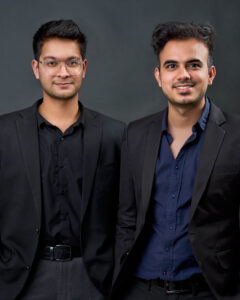
The numbers are daunting: Roughly 80 percent of the critical information that matches a patient to a clinical trial is unstructured data, sprinkled throughout a combination of clinical notes, lab results, and the myriad other documents in a patient’s medical records. Staying on top of these details is a challenge for oncologists. Triomics co-founders Khan and Singh developed a specialized large language model called OncoLLM, which extracts critical insights from that unstructured clinical data.
“Under the current circumstances, patients who are a good fit for a clinical trial often get missed,” says Khan. “And missing a trial can mean someone losing months or years of time with loved ones.”
By some estimates, only about 20% of admitted patients are properly screened for clinical trial compatibility. When leading cancer centers use Triomics’ platform, 100% of patients who see an oncologist are screened for a possible match to all clinical trials at that institution. OncoLLM can synthesize 20 years of patient history and compare it with clinical trials’ eligibility data in just a few minutes, a task that used to take hours of manual labor.
In 2022, as Triomics started working actively with customers and was looking to scale, they consolidated their infrastructure on Azure to take advantage of its model catalog, ease of use, and support for AI experimentation.
“While we are a healthcare company, the AI portion of our team is made up of true AI researchers,” says Triomics co-founder Singh. “Their job is to run experiments. Azure gives them the tools and flexibility they need to build and refine our models.”
Snorkel AI: Transforming expert knowledge into AI
The group of Stanford AI Lab researchers who would eventually found Snorkel AI grappled with a challenge that’s widespread in machine learning: AI-quality data.
“Building the AI models isn’t always the hard part,” says Ratner, Snorkel AI CEO and co-founder. “The real challenge is getting high-quality expert data sets to train, evaluate, and tune.”
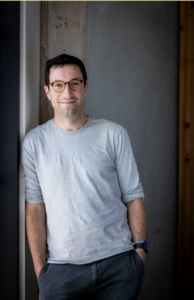
Snorkel AI helps enterprises in knowledge-rich, often highly regulated industries label, sample, filter, and augment massive amounts of information with the finesse and expertise of a human domain expert.
In late 2022, Snorkel AI became the first AI startup invited into the Microsoft for Startups Pegasus Program. Among other benefits, the partnership gave Snorkel AI access to Azure AI infrastructure powered by NVIDIA GPUs to execute cutting-edge AI research involving enterprise alignment, synthetic data generation, and more.
This yielded real-world results. Snorkel AI worked with a global bank building an AI application designed to extract information from highly complex legal contracts. In just a few months, Snorkel helped the bank achieve 94% accuracy and successfully deploy the AI system into production on Azure AI infrastructure.
“We are now seeing a surge of momentum around agentic AI, but specialized enterprise agents aren’t ready for production in most settings,” says Ratner. “These systems will not be deployed unless they become as trusted as human experts. Enterprises need domain-specific data and expertise to make this a reality.”
Early phase startups making a big difference
Microsoft for Startups helps companies like Triomics and Snorkel AI grow faster, scale smarter and sell more using enterprise-grade AI technology.
“Startups are where transformative AI innovation happens,” says Annie Pearl, CVP & GM, Azure Experiences and Ecosystems at Microsoft. “It’s exciting to see what these companies can do with access to the right tools, infrastructure, and support.”
With the power of AI, today’s bold innovators are building the future, unlocking what is possible to transform healthcare and improve lives.


