

A Decade of Learning: Building a Dynamic Workforce through Neurodiversity
Authored by Neil Barnett, Senior Director of Accessibility
April is World Autism Month, and this year marks the 10th anniversary of Microsoft’s Neurodiversity Program. Microsoft has long seen the positive business impact that neurodivergent talent brings to roles across the company. Today, we are launching a new best practices guide, which encapsulates a decade of insights from our program. These learnings have evolved into company-wide initiatives, and this guide aims to help other organizations achieve similar success.
In today’s tech landscape, and with the increasingly rapid adoption of AI, neurodiversity—recognizing varied neurological conditions—is a talent pool that is untapped by many organizations. Autism affects 1 in 36 children in the United States and latest surveys indicate that over 50% of Gen Z identify as neurodiverse, with up to 70% for Generation Alpha. Organizations that embrace neurodiversity will be able to unlock a vast talent pool, drive innovation, and boost productivity. And research shows cognitively diverse teams solve problems faster.
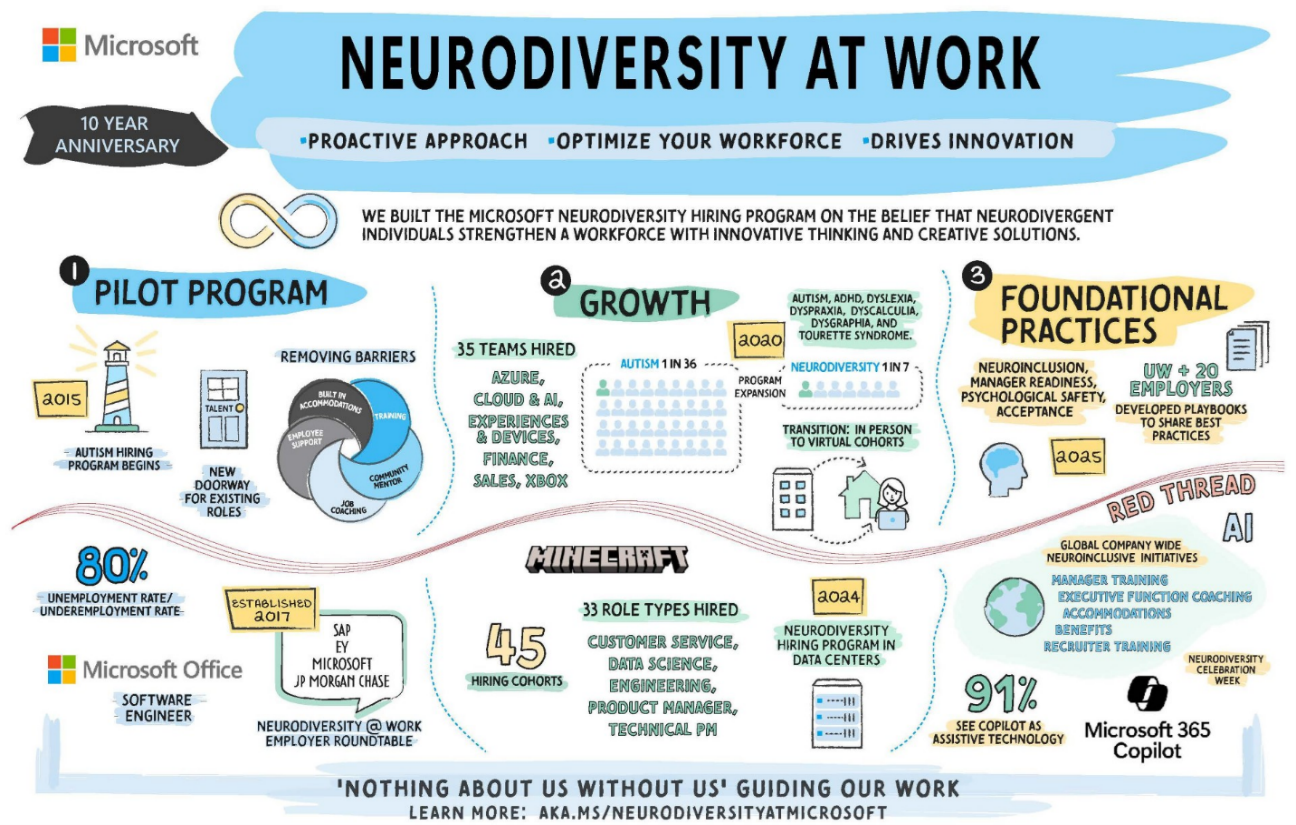
Over the past decade, we’ve learned to effectively welcome exceptional candidates through the Neurodiversity Program, empower managers, and drive business impact. We have hired a wide variety of positions, spanning early-career engineers in AI, Azure, Windows, and Xbox, as well as corporate positions in finance, customer support, and marketing. Besides recruiting top talent, the Neurodiversity Program also provides manager training in effective coaching skills, thereby enhancing people management practices across the organization. The program has been so successful that in 2024 we expanded to our Data Centers, offering employment opportunities in communities across the U.S. for roles such as Data Center Technicians and Critical Environment Technicians.
This isn’t just relevant for tech companies; nearly every business today is embracing AI, and to keep up, you need divergent thinkers. The Neurodiversity @ Work Employer Roundtable, that Microsoft co-founded with EY, SAP, and JP Morgan Chase, includes over 50 employers across 10 industries, who share best practices and extend their learnings to the broader employer community. Neurodivergent employees bring unique strengths, and this program has benefited our hiring practices across the board, making our workforce stronger and more resilient.
Video: Neurodiversity in the AI-powered workplace.
Looking ahead, we will continue to leverage insights from our Neurodiversity Program to drive meaningful organizational change. In today’s era of AI, divergent thinkers are crucial for driving innovation and maintaining a competitive edge. By fostering an environment where neurodiverse talent can thrive, we optimize our workforce and build a more dynamic organization.


